Global buyers are looking beyond price when choosing Bulk Herbs. They need dependable supply, verified identity, and consistent quality across every shipment. A bright color or strong aroma can be encouraging. It cannot replace laboratory testing.
Mark Blumenthal, founder and executive director of the American Botanical Council, has stated, “The quality of an herbal product is only as good as the quality of the raw material used.” This principle remains important for buyers evaluating chamomile, peppermint, turmeric, ginger, and other widely traded herbs. Each product carries a supply story. Buyers should examine the growing region, harvest season, drying method, moisture level, and storage conditions. A clean warehouse matters. So does a clear certificate of analysis.
Reliable suppliers usually provide botanical names, batch numbers, allergen information, pesticide screening, and microbial results. They can also explain whether herbs are whole, cut, powdered, or granulated. These details affect flavor, shelf life, extraction performance, and freight costs. Sustainable harvesting deserves attention too. Low prices may hide unstable sourcing or uneven quality.
No list is perfect.
Market demand changes quickly. One buyer may value organic certification, while another needs pharmaceutical-grade documentation. Even experienced purchasers can overlook packaging or humidity risks. That is why responsible sourcing combines supplier experience with independent verification. The top Bulk Herbs are not simply popular products. They are herbs supported by traceability, practical specifications, ethical cultivation, and evidence that matches the buyer’s intended use.
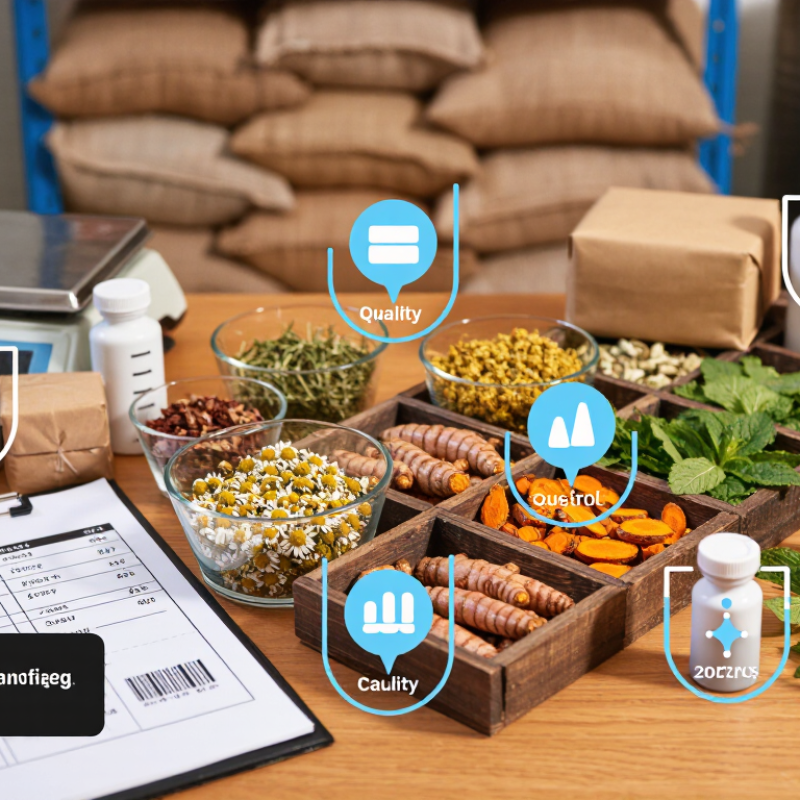
A top bulk herb is defined by more than attractive color or a low price. It must have a verified botanical identity, stable potency, and clean handling history. The World Health Organization reported in its 2019 Global Report that 88% of Member States acknowledged using traditional medicine. That level of use raises expectations for reliable raw materials.
Quality begins at the field. Buyers should request the Latin name, plant part, harvest date, origin, drying method, and complete batch traceability. Testing should cover moisture, heavy metals, pesticides, microbes, and unwanted adulterants. The 2023 European Rapid Alert System for Food and Feed report shows that contamination alerts remain a practical supply-chain concern. A certificate alone is not enough.
Consistency also matters. A serious supplier compares each lot with agreed specifications and keeps retention samples. Packaging should protect herbs from humidity, light, insects, and crushing during long-distance transport. Documentation must match the physical cargo.
No lot is perfect. Even experienced growers face weather changes and seasonal variation. This is where honest communication becomes valuable. Buyers should question unusually low prices and request corrective-action records. In practice, the best bulk herb is not always the strongest-smelling one. It is the lot that remains identifiable, tested, traceable, and commercially dependable from harvest to delivery.
Global buyers typically prioritize herbs and spices with strong international demand, reliable year-round supply, standardized quality, and efficient storage and transport characteristics.
The chart compares major bulk herb and spice categories by approximate global export value in 2023, shown in billions of U.S. dollars. Values are rounded estimates based on international merchandise trade classifications and are intended to highlight globally traded categories rather than individual suppliers or brands.
Global buyers increasingly seek herbs with broad culinary, tea, and botanical applications. Ginger and turmeric remain high-demand products, supported by large harvest volumes and familiar consumer use. FAOSTAT crop data for 2022 recorded more than 4.9 million tonnes of global ginger production. Turmeric production also exceeded 1.5 million tonnes. These figures show supply scale, not export availability. Quality, drying capacity, and origin still decide whether a crop becomes a reliable bulk ingredient.
International trade data supports this demand. The International Trade Centre’s Trade Map records multi-billion-dollar annual trade under HS 0910, which covers major spices and related products. Ginger, turmeric, and selected dried herbs appear repeatedly in global import flows. CBI market reports for Europe also identify oregano, rosemary, thyme, peppermint, and chamomile as commercially important herbs. Their demand comes from seasoning blends, herbal infusions, personal care ingredients, and standardized extracts.
Peppermint and chamomile deserve attention. They offer strong recognition and multiple processing options. However, “top demand” does not always mean the best buying opportunity. A 2023 market review by the European Commission noted that pesticide compliance, traceability, and contaminant testing strongly influence market access. This is where some suppliers still fall short. Buyers should compare volatile-oil content, moisture, microbial results, and harvest documentation, rather than relying on volume alone. Data classifications remain imperfect, because customs codes often combine different herbs and processed forms.
Global buyers often select bulk herbs such as peppermint, chamomile, ginger, turmeric, rosemary, and hibiscus. The right choice depends on regional demand, intended use, and reliable supply. Quality evaluation begins with correct botanical identification. Suppliers should state the scientific name, plant part, harvest period, and country of origin.
Appearance gives useful clues. Leaves should show natural color, a clean aroma, and limited breakage. However, visual inspection cannot detect pesticide residues or microbial contamination. Laboratory testing should examine moisture, foreign matter, heavy metals, aflatoxins, pesticide residues, and pathogens. Moisture matters greatly. Excess water can encourage mold during storage and transport.
Sampling must represent the full shipment, not only the best-looking bags. A certificate can look convincing, yet it may describe a different lot. Buyers should compare batch numbers, test dates, methods, and laboratory credentials. They should also review traceability records from harvest to warehouse. Storage conditions deserve attention too. Warm, damp containers can damage an acceptable product within weeks.
No test is perfect. Even experienced teams can overlook mixed plant material or weak packaging. Rechecking high-risk lots is sensible, especially after long ocean transport. Some purchasing decisions still rely too heavily on aroma and price. That habit needs reconsideration. Clear specifications, independent testing, and documented corrective actions provide stronger evidence for safe international trade.
Global buyers often choose bulk herbs for tea blends, culinary products, cosmetics, and natural flavoring. Peppermint brings a clean, cooling note to teas, confectionery, and oral-care formulas. Chamomile is widely used in calming herbal infusions and gentle personal-care products. Ginger adds warmth to beverages, seasonings, and wellness-oriented recipes. Its sharp aroma can dominate, however.
Turmeric supports spice blends, functional beverages, and cosmetic formulations requiring a golden color. Hibiscus provides a vivid red tone and a tart flavor for teas and fruit drinks. Rosemary is valued in culinary seasoning, aromatic extracts, and hair-care preparations. Nettle appears in teas and botanical formulas, but its handling requires care because dried leaves remain fragile. Uses vary by market, and traditional use does not prove a medical effect.
Tips: Confirm the botanical name, plant part, harvest date, moisture level, and storage conditions. Request testing for identity, microbes, heavy metals, and pesticide residues. Check import rules before ordering. Packaging should protect herbs from light, humidity, and strong odors. I have found that visual quality can mislead buyers; a bright color does not guarantee freshness. Supplier documents also need review, not blind trust. Small trial orders may reveal problems with aroma, cut size, or brewing strength before full-scale purchasing.
Global buyers often select dried basil, peppermint, rosemary, ginger, turmeric, and chamomile for steady demand. Sourcing begins with more than a low price. Buyers should verify the growing region, harvest season, drying method, and lot traceability. I recommend requesting a current certificate of analysis for every major shipment. It should address moisture, microbiological safety, pesticide residues, heavy metals, and identity testing. Samples should match the final cargo.
Storage conditions can protect or quietly damage bulk herbs. Use food-grade liners, sealed cartons, and clean pallets above the warehouse floor. Keep products away from sunlight, strong odors, insects, and condensation. A cool, dry room is essential. Humidity is often the hidden problem. Receiving teams should check carton integrity, aroma, color, and moisture before unloading everything. No system is flawless. A rushed inspection can miss one damp inner bag.
Trading requires clear specifications and patient documentation. Contracts should define botanical names, grade, packaging, tolerances, delivery terms, and inspection procedures. Buyers also need accurate commercial invoices, packing lists, origin records, and transport documents. Local import rules may require extra testing or labeling. Check them before production, not at the port. A practical buyer keeps retention samples from each lot and records storage temperatures. The paperwork feels tedious. It prevents expensive arguments later. Yet even careful teams sometimes overlook seasonal color changes, so specifications should allow evidence-based review rather than automatic rejection.
Ginger, turmeric, peppermint, chamomile, rosemary, thyme, oregano, and hibiscus attract many buyers. Demand varies by region and intended use. Large harvests do not guarantee export-ready supply.
They serve culinary products, teas, beverages, seasonings, and botanical formulations. Their familiar flavors support repeat demand. Supply quality still matters.
Check the scientific name, plant part, harvest period, and country of origin. Compare these details with the purchase specification. Do not trust labels alone.
Request testing for moisture, microbes, foreign matter, heavy metals, toxins, and pesticide residues. Testing should match the herb and its intended market. One certificate is not enough.
Excess moisture can encourage mold during storage and ocean transport. Ask for moisture results before shipment. Dry does not mean flawless.
Use representative samples from multiple bags or pallets. Check color, aroma, cut size, breakage, and visible foreign material. The brightest sample may not represent the lot.
Useful documents include batch numbers, test dates, laboratory details, harvest records, and storage information. Traceability should connect the field, warehouse, and shipment. Paperwork can still contain gaps.
Packaging should limit light, humidity, odors, and physical damage. Inspect seals before loading. Warm, damp containers can ruin acceptable herbs within weeks.
A small trial can reveal aroma, brewing strength, cut size, moisture, and packaging problems. It reduces risk before a larger purchase. Small tests help.
Avoid choosing only by price, color, aroma, or shipment volume. Compare laboratory results, traceability, specifications, and corrective actions. No evaluation method is perfect.
Top Bulk Herbs for global buyers are defined by consistent quality, reliable supply, strong international demand, and clear documentation. Popular choices may include mint, chamomile, ginger, turmeric, rosemary, hibiscus, and other culinary, beverage, wellness, and cosmetic herbs. Buyers typically assess identity, freshness, aroma, color, moisture levels, cleanliness, pesticide residues, microbial safety, and traceability before making a purchase. Standardized testing and careful supplier communication help ensure that each shipment meets the required specifications.
The main uses of Bulk Herbs range from teas, seasonings, extracts, and food ingredients to personal-care products and traditional wellness preparations. Successful international trade also depends on responsible sourcing, suitable packaging, climate-controlled or dry storage, accurate labeling, and efficient transportation. By comparing origin, harvest practices, processing methods, certifications, shelf life, and total cost, global buyers can select herbs that offer dependable performance and long-term supply stability while meeting applicable quality and safety requirements.

Neo-Green Herbs